April 2026
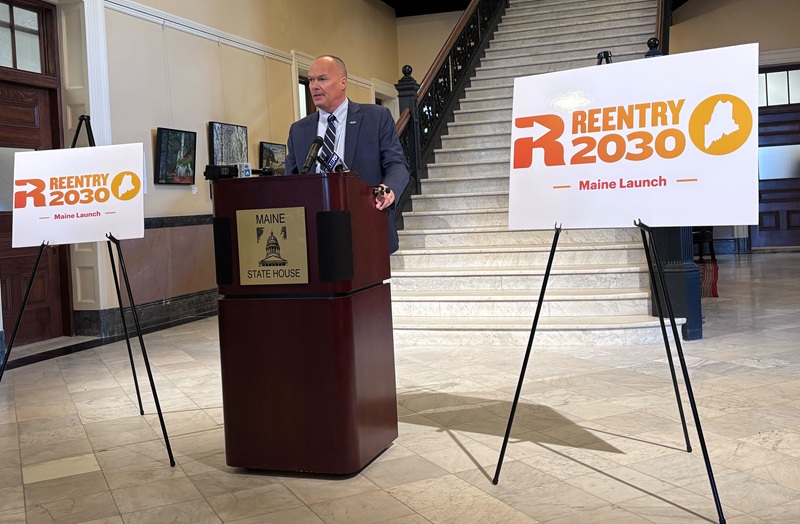
Maine Corrections Commissioner Randall Liberty speaks during the launch on April 27, 2026.
During this year’s Second Chance Month, Maine became the latest state to join the CSG Justice Center’s Reentry 2030 initiative, which aims to reduce recidivism 30% nationally by 2030.
By joining Reentry 2030, Maine’s leaders across corrections, housing, health care, workforce, and education systems are committing to lower barriers to basic needs—and set people up for a second chance after incarceration.
Through Reentry 2030, Maine is advancing a “reentry from day one” approach, ensuring that planning begins at intake and continues through release and community supervision. The state is focused on improving access to housing, employment, health care, and education to break the harmful and costly cycles between incarceration, homelessness, hospitalization, and unemployment.
Maine’s Reentry 2030 goals include the following:
- Ensure reentry planning starts at intake for every person.
- Ensure people leave incarceration with identification, vital records, and access to health care, including Medicaid enrollment for all eligible individuals.
- End releases to homelessness and ensure 85% of people return to stable housing.
- Ensure every person leaves with a resume, 50% earn a job-ready credential, and 40% complete a job interview before release.
- Reduce unnecessary emergency room visits by 50%.
View the full list of Maine’s goals.
“Maine DOC is committed to breaking incarceration cycles by expanding access to housing, employment, behavioral health services, and additional resources,” said Commissioner Randall Liberty of the Maine Department of Corrections (DOC). “We look forward to working with our partners to achieve these goals.”
As part of this effort, workforce leaders are playing a key role in expanding access to employment opportunities.
“Access to stable, meaningful work drives both economic growth and public safety,” said Maine Department of Labor (MDOL) Commissioner Laura Fortman. “When people returning from incarceration find fair-wage jobs with real pathways forward, everyone benefits—businesses gain motivated workers, families gain stability, and communities grow safer and stronger. MDOL is proud to align workforce resources, engage with employers, and accelerate connections to work.”